

Meet Manager of Refereeing at CONCACAF Lance VanHaitsma
WEST PALM BEACH, Fla. — Lance VanHaitsma, Manager of Refereeing at CONCACAF (The Confederation of North, Central America and Caribbean Association Football), visited Keiser University’s Flagship campus to share his experiences. As a grassroots referee inspired to become a professional referee myself, interviewing Mr. VanHaitsma allowed me to listen and understand his route, making him the professional he is today.
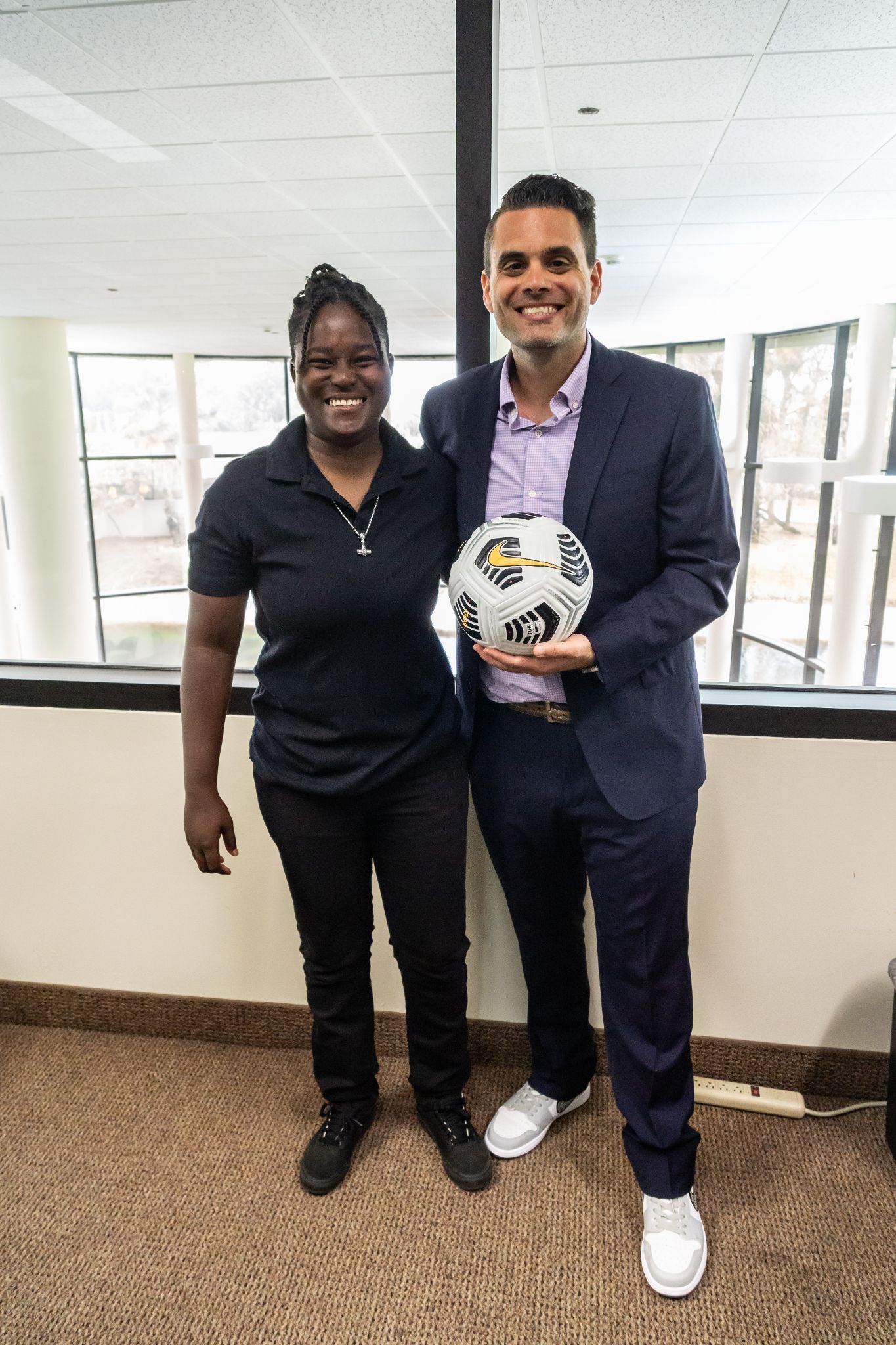
From a young age, Lance was involved in various sports. His family was into sports, and he became interested in soccer because his friends played. In high school, he became more dedicated to soccer and eventually gave up other sports to focus on it. He played college soccer for two years and stayed connected with his high school and college team friends. After playing, Lance says he wanted to continue engaging in the sport, so he volunteered as a goalkeeper coach for his brother’s travel soccer team. He then started refereeing high school soccer before ultimately earning his US Soccer certification. As he moved to Florida, his refereeing career took off.
Just like athletes, officials must be elegant, powerful, and challenging. Refereeing is a lifetime commitment in terms of physical and mental preparation. The referee maintains order among the field’s 22 players, coaches, replacements, and spectators.
Lance states that “the body is an engine. When you’re a professional athlete, you need to provide your body with the right fuel just like the players do to prepare because, unlike the players, the referee is expected to cover all 120 yards x 80 yards of the field. Being able to manage all 22 players on the field, the coaches on the sideline, the substitute players on the sidelines, as well as the spectators, is a challenge. A lot of responsibility falls on the referee, so you have to be both physically and mentally strong to maintain order out on the field.”
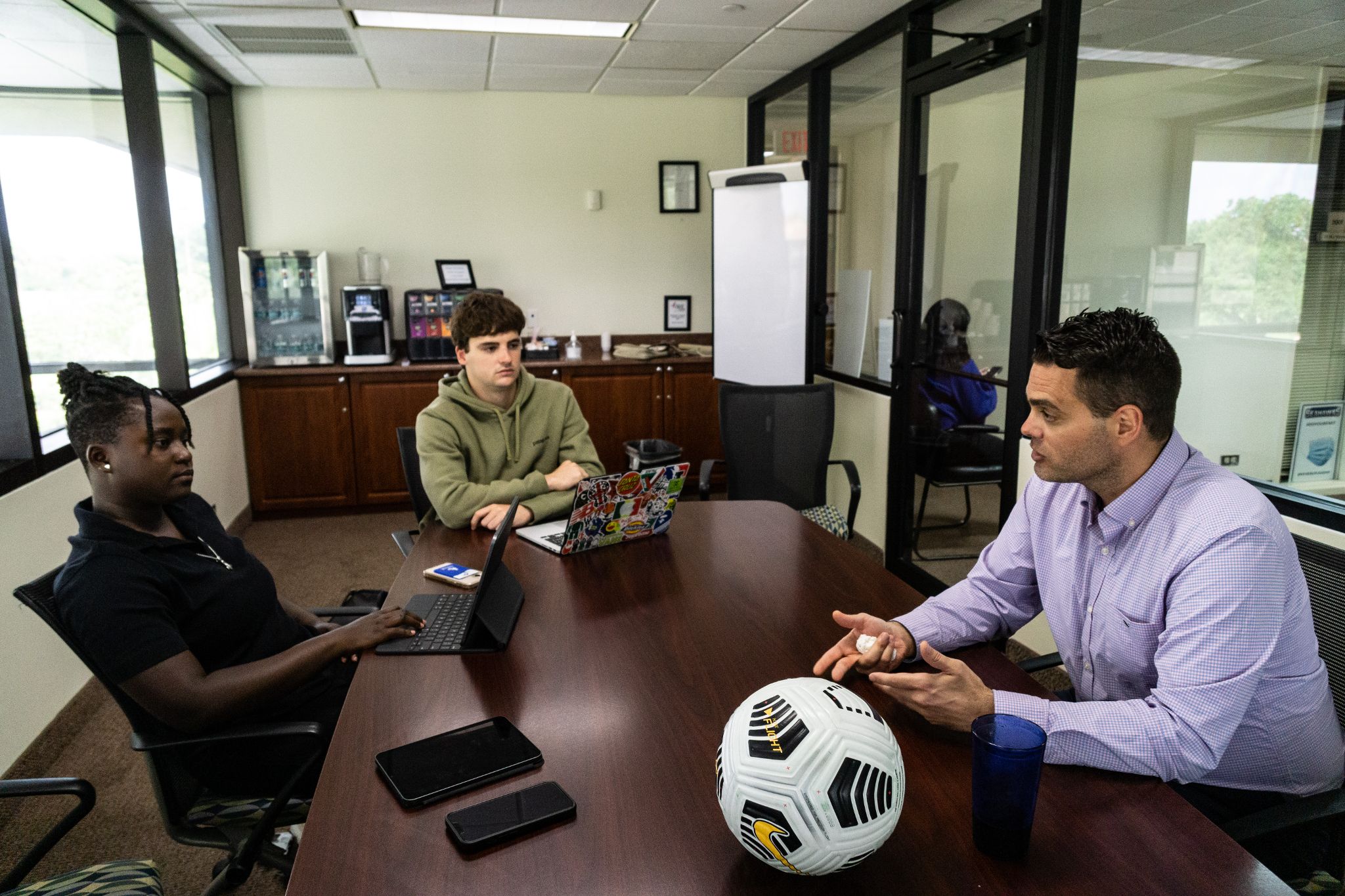
Mr. VanHaitsma discusses his transition to futsal—a football-based game played on a hardcourt like a basketball court—and how Herb Silva and Shane Butler were instrumental in his development as a player. He was chosen to represent the United States at the 2016 World Cup in Columbia after being nominated for the FIFA futsal panel in the United States and working the final of a competition in Guatemala. His futsal career evolved, leading to his position as a FIFA referee futsal instructor.
Despite the fame that players receive, Lance points out that there are already FIFA referees in Mexico with shoe contracts who are compensated depending on how many games they play.
“Down the road, we’re going to see more companies look to referees for potential sponsorship opportunities. One of my best friends named Leland Grant has created his own referee shoes—they’re a hybrid of cleats and a turf shoe—and it’s something that’s never been done before..”
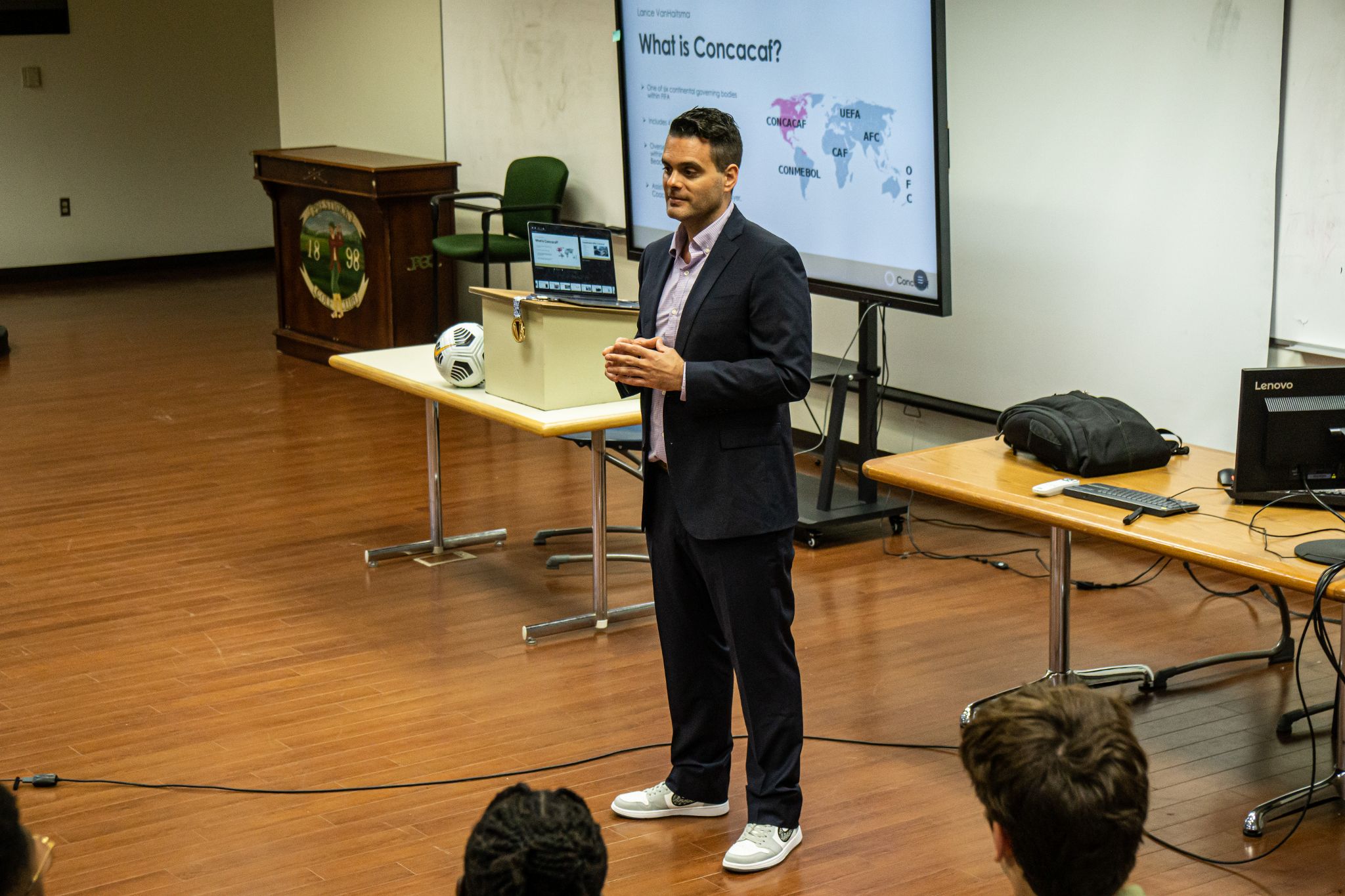
There are many opportunities for referees, and as a student, it was valuable to learn about the benefits of early exposure to cooperation, accountability, and leadership in athletics. Lance explained how this prepares children for the professional world. Team sports foster friendships and an interest in the success of others; both of which are crucial for career success.


Another area of success for Lance has been in supporting the CONCACAF Women’s Refereeing Program, which is unique in its staff dedicated to developing female referees. Michelle Pie, a FIFA teacher from Canada who serves on the FIFA Referee Committee, oversees the day-to-day management and education of the Women’s Refereeing Program. The program has accomplished incredible feats, like implementing VAR at a youth competition and only using female VARs for the CAP W championship. The strategy has enhanced CONCACAF’s FIFA Under-20 Men’s and Women’s World Cup participation. He also talks about the loyalty and determination of female referees, who have a lot on their plates.
When I told him that I was solely focused on my referee career, he advised that I should apply my skills to the operations aspect of the sports world. He praised the changes in his organization for making the necessary modifications to support female referees and discussed how various organizations were formed worldwide to assist in developing and improving women’s participation in this competitive environment.
This is an unedited user writing submission. The views, information, or opinions expressed in this article are solely those of the author and do not necessarily represent those of Best Version Media or its employees.
