

Houston Rodeo: 20 years behind the scenes with Douglas N Burns
HOUSTON — A Q&A with Douglas N Burns who is a member of the Houston Rodeo broadcast team.
How long have you been working for the Houston Rodeo?
Douglas N Burns: I’ve been working with the rodeo broadcast team since 2003. My role on the team has morphed over the years and now involves working directly with both the TV broadcast and the rodeo officials and judges. I like to joke that I “score” the rodeo, but the truth is I’m listening to the officials on the rodeo floor and keeping track of the contestant scores & projected winnings in order to help project a winner each night and for each supper series. This information is relayed in real time to the announcers in the booth. I also have to keep the rodeo producers informed on potential winners and challengers as each serries comes to a conclusion so they can get the winning contestant camera ready for the live trophy presentation at the conclusion of each series and the championship rounds.

How big is the Houston Rodeo in terms of what it means to the City of Houston?
Burns: The Houston Livestock Show and Rodeo is easily the biggest annual social event of the year. I’ve compared it to out-of-towners as New Orleans Mardi Grass with cowboy hats and boots. It’s like hosting a super bowl every night for 20 straight days. It’s not uncommon to have around 200,000 people on the grounds in a single day and over 70,000 in the stadium watching the rodeo and concert. Rodeo Houston brings an estimated $390 million into the local economy every year and supports nearly 6000 seasonal jobs. But to put on a show of this size also requires the help of over 35,000 volunteers working on over 100 different committees. That’s the equivalent size of many major corporations. Without the dedicated volunteers the rodeo couldn’t do what they do – raise over $500M annually in educational scholarships for area youth.
What does it mean to the country if anything?
Burns: I’ve heard it said that rodeo is the last blue-collar sport in America. The contestants are all independent operators who only get paid if they place or win their event. They must cover all their own travel, entry fees and operating expenses. When you figure the best players in the sport are on the road up to 200 days out of the year that’s quite an expense and commitment. I have an incredibly high respect for what these contestants do and their commitment to the sport. They’re not only incredible athletes, but also preserving and promoting a way of life that is indicative of the American spirit. Work hard, pursue excellence, and with some talent and luck you can achieve your dreams.
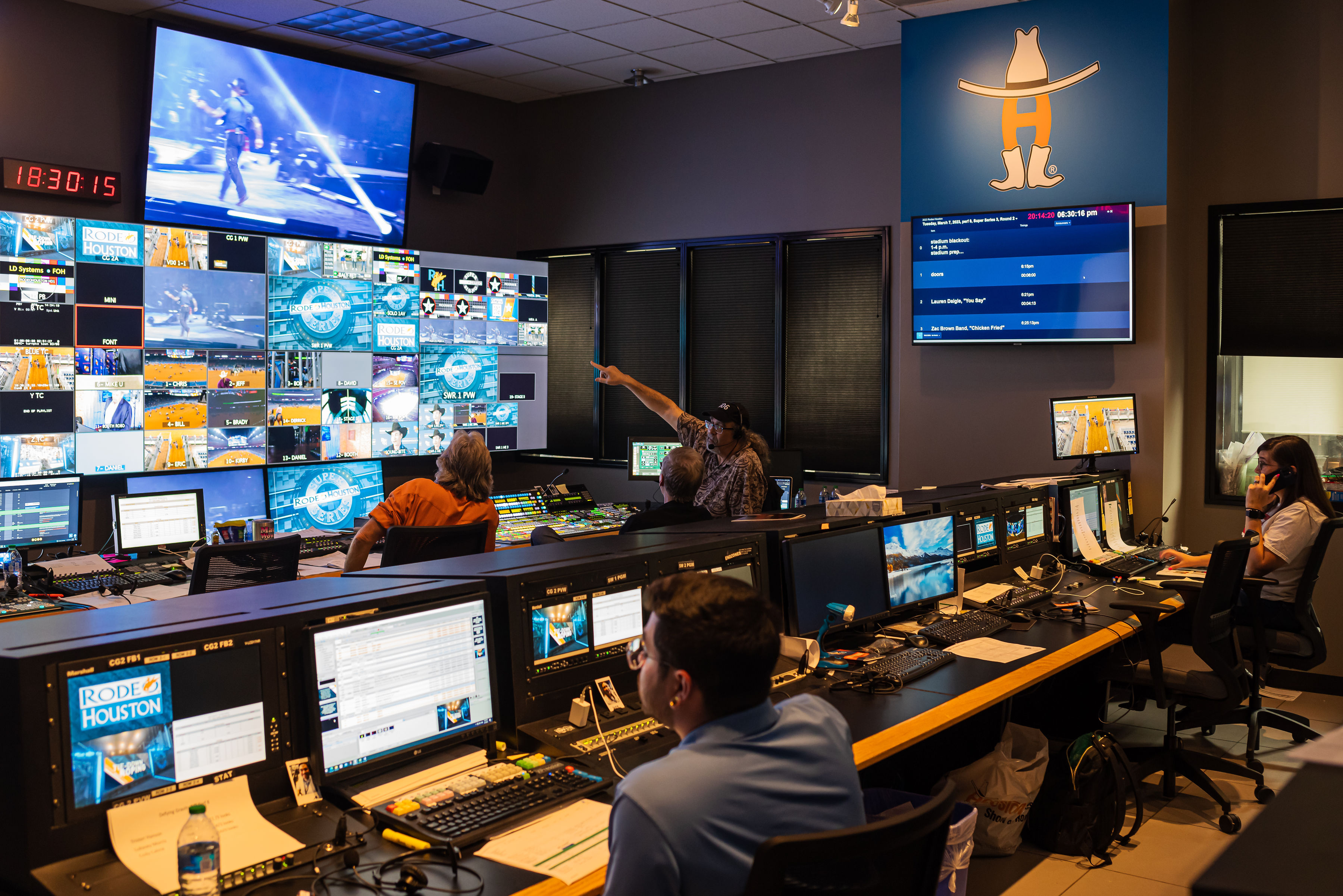
What is your role behind the scenes at the rodeo?


Burns: Rodeo Houston produces a LIVE television show as an interictal part of the fan experience every night of the rodeo. Not only do the 70,000+ fans in the stadium watch the production, but we also simulcast (in 2023) to three broadcast TV networks nationwide including a Spanish language broadcast.
How has the rodeo (from your perspective) changed over all the years you’ve been working there?
Burns: Every year there’s something new at the rodeo. Most people wouldn’t notice all the changes as sometimes they’re quite minute, like graphic displays and additions. Sometimes they’re major like the recent addition of a second women’s event, Breakaway Roping. We’ve had a couple of different graphic looks over the years, a rotating list of specialty acts, rules changes, stage & lighting upgrades and more. This doesn’t include the ongoing technical upgrades to the broadcast equipment in the studio.
What would be 1 or 2 best memories that you can recall about the rodeo?
Burns: I don’t really have a single best memory from the rodeo. After two decades much of it runs together. I’ve witnessed some incredible athletic performances in addition to some legendary musical acts. The people I’ve worked with however are a different story. The majority of the studio personnel have worked there for many years. All are broadcast professionals who work in various areas of the industry and many of us work together on other projects throughout the year. However, rodeo is a unique place and many of us have become as close as family. One of my closest friends at the rodeo is often referred to as my ‘rodeo wife’ by my spouse due to the amount of time we spend together during the show.

What do you know about the mutton busters – my favorite part…
Burns: “Let’s put your kids on farm animals and call it entertainment!” – Mutton Bustin was added to the show in 1999 and has since become a fan favorite. Kids ages 5 &6 are put on the back of sheep and are told to hold on. Some fall off quickly, others can’t seem to let go. But it’s always fun to watch what they do. The committee that runs the event keeps everything moving and the energy upbeat. I’ve had the privilege the last several years to oversee the contestant headshots during registration in January. The kids are mostly dressed in their finest cowboy gear and get their picture taken. The photos are used on the center screen just like the regular event contestants for each rider. I will say, the kids tend to smile more in their photos than the adult contestants do.
This is an unedited user writing submission. The views, information, or opinions expressed in this article are solely those of the author and do not necessarily represent those of Best Version Media or its employees.